Direct answer. A DOOH media buying guide for Indian agencies: plan offline screens with digital accuracy, from audience and dwell time to proof of play and QR scans.
Good DOOH media buying starts where digital planning starts: with the audience, the objective and the one number that proves it worked. The difference from traditional outdoor is that digital screens can log every play, so an agency can plan offline media and still report it with digital accuracy.
This guide gives media planners and buyers a step-by-step way to do that in India, from choosing environments to building a client report. If you need the channel basics first, read our complete guide to DOOH advertising in India.
Key takeaways
- Plan DOOH from the audience and the moment, not from a list of available sites.
- Dwell time, the time a person spends in front of the screen, decides how much your creative can say.
- Agree the measurement plan with the client before launch: what an impression means, how delivery is proven, and which outcome counts.
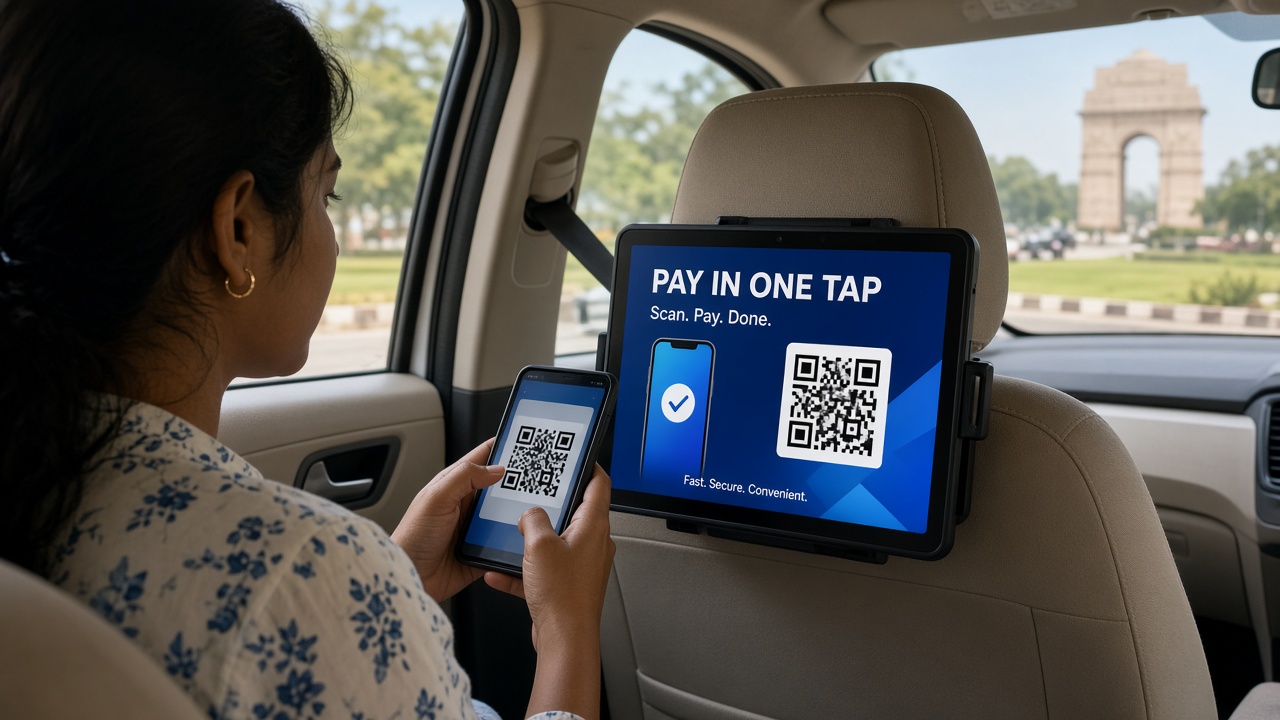
- Put a QR code and a dedicated landing page on every creative so offline exposure produces a digital signal.
- Report playouts, scans and the client's own search and sales data together, then move budget to what works.
How DOOH media buying differs from traditional outdoor
Outdoor advertising, or OOH, covers everything from roadside hoardings to bus shelters. DOOH (digital out-of-home) is the screen-based part, where ads can be scheduled, changed remotely and logged.
That log is the big shift for media buying. Proof of play is the record that an ad actually ran, when and where. With a printed hoarding, the buyer usually gets photographs of the site. With a digital screen, the buyer can get a play-by-play record.
| What the planner needs | Static hoarding | Roadside digital screen | In-cab screen |
|---|---|---|---|
| Viewing situation | Passing traffic, seconds | Passing traffic, shared loop | One passenger, for the ride |
| Proof it ran | Site photographs | Playout report from the operator | Play logs per vehicle with GPS |
| Creative change | Reprint and remount | Upload a new file | Upload a new file, reviewed first |
| Built-in response path | Phone number or short URL | QR possible, but often far away | QR at arm's length |
| How it is usually sold | By site and period | By slot or loop share | By vehicle and month |
None of these is right for every brief. The table helps you match the format to the objective instead of defaulting to whatever the client bought last year.
A 7-step DOOH media planning framework for agencies
This is the planning sequence we would use for any DOOH brief. It borrows the discipline of digital planning and applies it to physical screens.
- Fix the objective and one KPI. Awareness, consideration or action. Pick one primary KPI, such as QR scans, branded search volume or store visits, and write it into the brief.
- Map the audience to places and moments. Ask where your client's buyers are, at what time, and in what state of mind. A founder in an airport cab and a shopper in a mall are different audiences, even in the same city.
- Choose environments by dwell time. Short exposure suits one brand line and a logo. Longer dwell, such as a 20 to 45 minute cab ride, can carry a product demo and a call to action.
- Decide the buying route. Direct, self-serve or programmatic. Our explainer on how programmatic DOOH works covers the trade-offs in detail.
- Brief creative for the environment. Write for the screen, the distance and the sound setting, not for the TV edit. Silent screens need the message to work with no audio at all.
- Agree measurement before launch. Define what counts as an impression, how proof of play is shared, and how the outcome will be tracked. Set up the client's landing page and baseline numbers before day one.
- Report, then reallocate. Compare creatives and cities on the KPI, and shift budget toward what is working mid-flight where the seller allows it.
Step 6 is where most DOOH plans fall apart. The IAB's July 2025 DOOH Measurement Guide recommends aligning measurement with campaign goals before launch, so the right data is collected from the start.
How to budget an in-cab DOOH plan: a worked example
In-cab media is a useful case study because it is sold by vehicle, not by modelled impression. That makes the budget easy to defend in a client meeting.
On Backseat Network, the formula is: cabs × months × ₹4,000, plus 18% GST. You pick the city, the cab count and the number of months, and the total shows before you pay.
| Cabs | Months | Media | GST at 18% | Total |
|---|---|---|---|---|
| 10 | 1 | ₹40,000 | ₹7,200 | ₹47,200 |
| 25 | 1 | ₹1,00,000 | ₹18,000 | ₹1,18,000 |
| 10 | 3 | ₹1,20,000 | ₹21,600 | ₹1,41,600 |
A practical way to split a first plan: start with airport cabs for premium reach, then add city cabs for frequency. Mumbai, Delhi NCR and Bengaluru are live, and Hyderabad, Chennai and Pune are onboarding. The city pages show the routes and hotspots each fleet covers.
For agency finance teams, payment is by UPI, card or netbanking through Razorpay, and the GST invoice in INR is emailed automatically.
Compliance and approvals before you go live
DOOH creative is still advertising, and Indian rules apply to it like any other medium. Build these checks into your workflow:
- ASCI code. The Advertising Standards Council of India's code applies to everyone who commissions, creates, places or publishes ads. It requires ads to be honest, truthful, decent and fair in competition.
- Claims and comparisons. Keep proof on file for every number and superlative in the creative.
- Seller review. Most networks review creatives before they play. Leave time for it in the launch plan.
- Language versions. Plan Hindi and English versions early if the audience needs both, rather than adding one at the last minute.
Reporting DOOH to clients with digital accuracy
A client report should show three layers, from what ran to what changed. Keep each number labelled with its source, so nobody confuses a modelled figure with a counted one.
| Layer | What to report | Where the data comes from |
|---|---|---|
| Delivery | Plays by city, date and route; screen uptime | Seller's proof of play logs |
| Response | QR scans by creative; visits to the dedicated landing page | Seller's scan counts; client's site analytics |
| Outcome | Branded search, enquiries or sales against a baseline | Client's own search, CRM and sales data |
Be precise about definitions. On Backseat Network's in-cab screens, for example, impressions are counted as playouts, not unique viewers. Say so in the report rather than letting the client read it as reach.
For the delivery layer, see how GPS-logged playouts and QR scans are recorded. For the outcome layer, our guide on how to measure OOH brand lift explains test and control designs that work without a large survey budget.
Running DOOH for several clients? See how agencies plan and book in-cab campaigns, from self-serve to managed.
Frequently asked questions
What is DOOH media buying?
DOOH media buying is the process of planning and purchasing ad time on digital screens outside the home, such as roadside displays, airport screens and in-cab tablets. Unlike printed hoardings, digital screens can log each play, so buyers can schedule creatives, change them remotely and report delivery with far more precision.
How do agencies plan a DOOH campaign?
Agencies plan DOOH by starting with the objective and one KPI, then mapping the audience to places and moments. Next they choose environments by dwell time, decide whether to buy direct, self-serve or programmatic, brief creative for the screen, agree measurement before launch, and reallocate budget as results come in.
How much does in-cab DOOH advertising cost in India?
Costs vary by network and format. On Backseat Network, media costs ₹4,000 per cab per month plus 18% GST, so the total is cabs × months × ₹4,000 plus GST. For example, 25 cabs for one month comes to ₹1,00,000 in media and ₹1,18,000 including GST.
How do you measure a DOOH campaign for a client?
Measure a DOOH campaign at three levels. First, delivery: proof of play logs by screen, time and location. Second, response: QR scans and visits to a dedicated landing page. Third, outcomes: the client's branded search, enquiries or sales compared with a baseline period or with cities where the campaign did not run.
What creative works best on DOOH screens?
Creative that delivers one message fast works best. Use one visual, large type that reads in about two seconds, and a single clear call to action. For silent screens, the story must make sense without any sound. Add a QR code where people can act, and produce Hindi and English versions where the audience needs both.
Do DOOH ads in India need to follow the ASCI code?
Yes. The Advertising Standards Council of India's code applies to everyone involved in commissioning, creating, placing or publishing advertisements in India. It requires ads to be honest, truthful, decent and fair in competition. Agencies should check claims, comparisons and category-specific guidelines before any DOOH creative goes live.
Conclusion: plan DOOH media buying like digital, report it like digital
DOOH media buying rewards agencies that plan from the audience and agree measurement upfront. Choose environments by dwell time, keep one KPI, and put a scannable action on every creative.
Do that, and offline screens stop being a line item the client takes on trust. They become a channel you can defend with logs, scans and the client's own numbers.
Want to see how in-cab media fits your next client plan? Book an Agency Demo.
Put this on a cab this week
₹4,000 per cab per month plus GST. Build the ad yourself, or book a 15-minute demo.