Direct answer. Types of advertising compared for Indian brands: what each channel does, how to measure its ROI fairly, and how to pick the right mix for your goal and budget.
No single type of advertising delivers the highest ROI for every brand. Return depends on your goal, your audience, your margins and, above all, how you measure it, because each channel looks best under the metric it was built for.
This guide walks through the main types of advertising in India, what each one does well, and how to compare their ROI on a fair basis. For a deeper look at one fast-growing channel, see our complete guide to DOOH advertising in India.
Key takeaways
- ROI is a result of the goal, the audience and the measurement method, not a fixed property of a channel.
- Digital took 63% of Indian ad revenue in 2025, but TV still reached around 745 million people a week, per the FICCI-EY 2026 report.
- Last-click reporting flatters channels that capture demand and undercounts those that create it.
- Compare channels on incremental results: what happened because of the ad, against a control.
- Most brands get the best total return from a mix, with each channel given one clear job.
What does ROI mean in advertising?
ROI (return on investment) compares the profit an investment produces with what it cost. In advertising, the honest version uses incremental profit: the extra profit that would not have happened without the ad.
Advertising ROI = (Incremental gross profit − Ad cost) / Ad cost × 100
For example, with illustrative numbers: a campaign that costs ₹1,00,000 and produces ₹3,00,000 in incremental gross profit has an ROI of 200%.
Two related metrics often get confused with ROI:
- ROAS (return on ad spend): revenue divided by ad spend. It ignores margins and costs, so a high ROAS can still lose money.
- CPA (cost per acquisition): ad spend divided by the number of customers or leads. Useful for efficiency, silent on profit.
The main types of advertising in India, with 2025 figures
The FICCI-EY Media and Entertainment Report 2026 gives the most complete picture of where Indian ad money went in 2025. Total advertising grew 13.5% to about ₹1.5 trillion.
| Type of advertising | What it does best | 2025 data point (FICCI-EY) | Typical way ROI is read |
|---|---|---|---|
| Digital (search, social, video, display) | Targeting, fast testing, direct response | ₹947 billion, 63% of ad revenue, up 26% | Clicks, conversions, ROAS |
| E-commerce and point-of-sale ads | Reaching buyers at the moment of purchase | ₹220 billion, up 50% | Sales on the platform, ROAS |
| Television | Mass reach and brand building | Linear TV ad revenue down 10%; TV reaches around 745 million people weekly | Reach, GRPs, sales models |
| Credibility and local, affluent readers | Ad revenue up 2%, led by premium formats | Reach, response codes | |
| Radio | Local frequency, drive time | ₹23 billion in segment revenue, down 7% | Reach, calls, offers |
| Out-of-home and DOOH | Presence in the physical world, local targeting | OOH up 13%; digital OOH is 18% of OOH revenue | Proof of play, QR scans, matched-city lift |
| Live events and experiential | Deep engagement, sampling | Organised live events up 44% | Leads, sampling, sentiment |
Two cautions when reading this table. First, revenue share shows where money goes, not where it works hardest. Second, each channel's "typical way ROI is read" is different, which is exactly why cross-channel ROI comparisons go wrong.
Digital advertising
Display advertising is image or video ads on websites and apps. Targeted advertising uses data about people or context to choose who sees an ad. Digital's strength is measurability and speed: you can test a message on Monday and scale it on Wednesday.
Its weakness is the flip side. Platform dashboards often credit the last ad clicked before a sale, which overstates channels that catch people who were already going to buy.
Television, print and radio
These channels build reach and memory at scale. Their ROI is usually read through reach and frequency, or through marketing mix models that link spend to sales over time. They rarely look good in a last-click report, because people do not click a TV ad.
Out-of-home and DOOH
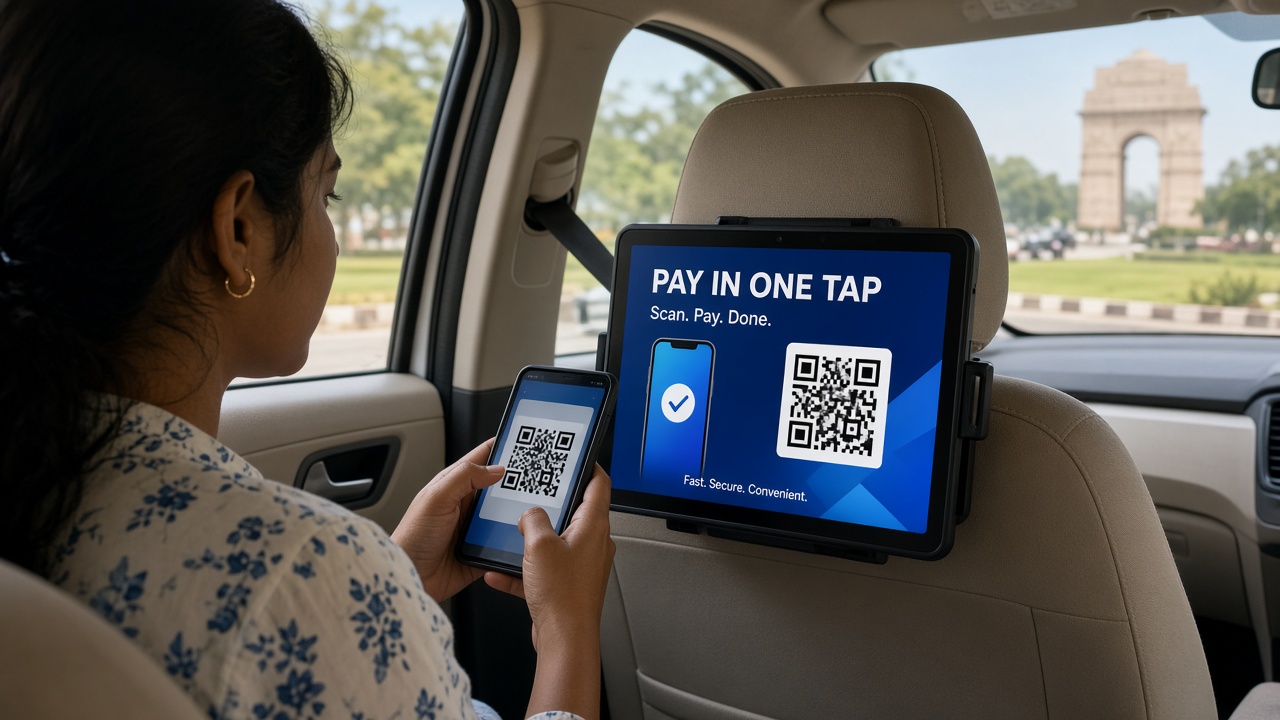
Outdoor advertising reaches people in the physical world, near where they live, work, travel and shop. Digital formats add scheduling, remote changes and play-by-play logs. Formats with long dwell time, such as airport and in-cab screens, can also carry a QR code, which gives OOH a direct response path it traditionally lacked.
How to compare advertising ROI across channels fairly
The question "which channel has the highest ROI?" usually gets answered with numbers that were never comparable. Fix the method first.
- Use the same outcome for every channel. Pick one business result, such as orders, qualified leads or gross profit, and measure every channel against it.
- Measure incrementality, not attribution. Ask what would have happened without the ad. Holdout groups, matched-city tests and lift studies answer that; last-click reports do not.
- Use the same time window. Search converts in days. TV, OOH and print may take weeks to show up in sales or branded search.
- Include all costs. Media, production, agency fees and discounts all belong in the denominator.
- Read efficiency and scale together. A channel with a great ratio on a tiny budget may not hold that ratio when you scale it.
Google's Brand Lift measurement guide shows why a single headline metric can mislead. In its example, two campaigns each cost $100. The first shows a 10% absolute lift but reaches fewer people, producing 667 lifted users. The second shows only a 5% lift but reaches more people, producing 1,000 lifted users at a lower cost per lifted user. The "weaker" lift was the better buy.
The IAB's July 2025 DOOH Measurement Guide points to marketing mix modelling and multi-touch attribution for cross-channel work, and recommends matched market and synthetic control tests for incrementality.
Choosing the right types of advertising for your goal
Start from the job, not the channel. This table maps common goals to the roles different types of advertising usually play.
| Goal | Channels that often lead | Channels that support | What to measure |
|---|---|---|---|
| Launch awareness | TV, OOH and DOOH, online video | Social, PR, events | Reach, branded search, recall surveys |
| Consideration | Social, video, content, airport and in-cab screens | Search, email | Site visits, time on page, QR scans, enquiries |
| Conversion | Search, e-commerce ads, retargeting | Email, WhatsApp, offers | Orders, leads, CPA, incremental sales |
| Local footfall | Local OOH, radio, maps and local search | Print, events | Store visits, calls, coupon codes |
| Retention | Email, WhatsApp, CRM, app messages | Loyalty offers | Repeat purchase rate, churn |
Two principles help with budget splits:
- Give every channel one job and one KPI. A channel asked to do everything gets judged on nothing.
- Keep a test budget. Put a fixed share aside each quarter to test a new channel against a control, then scale only what proves incremental.
Where in-cab DOOH fits in the mix
In-cab screens sit between awareness and consideration. They reach one passenger at a time for the length of a ride, and a QR code turns that attention into a measurable action.
On Backseat Network, a silent tablet sits on the cab headrest about 60 cm from the passenger, for rides of 20 to 45 minutes in most cities. Playouts are logged with GPS, QR scans are counted per creative, and media costs ₹4,000 per cab per month plus 18% GST. A 10-cab, 3-month test comes to ₹1,41,600 including GST.
That makes it a practical channel for a matched-city ROI test: run it in one live city, keep a similar city dark, and compare enquiries and branded search. The channel comparison page sets in-cab screens against hoardings and digital billboards, and the step-by-step guide to how the network works covers booking and reporting. If you are planning your first campaign, start with our step-by-step blueprint for launching an advertising campaign in India.
Frequently asked questions
What are the main types of advertising?
The main types of advertising are digital (search, social, video and display), e-commerce and retail media, television, print, radio, out-of-home including digital out-of-home, and live events or experiential marketing. Each does a different job, from mass reach to direct response, so most brands combine several rather than relying on one.
Which type of advertising has the highest ROI?
No type of advertising has the highest ROI for every brand. Return depends on the goal, audience, margins, creative and measurement method. Channels that capture existing demand often look best in last-click reports, while channels that create demand need incrementality tests to show their real contribution. Test channels against a control before deciding.
How do you calculate advertising ROI?
Subtract the ad cost from the incremental gross profit the campaign produced, divide by the ad cost, and multiply by 100. Incremental means profit that would not have happened without the ad. Include media, production and agency costs, and measure over a window long enough for the channel to work.
What is the difference between ROI and ROAS?
ROAS divides revenue by ad spend, while ROI compares profit after costs with what you spent. A campaign can show a high ROAS and still lose money if margins are thin or other costs are large. ROI is the better measure of whether advertising actually made the business money.
How much should a brand spend on advertising in India?
There is no fixed rule. Start from the goal and the customer value: what a new customer is worth over time, and what you can afford to pay to acquire one. Keep a separate test budget for new channels, and scale only the channels that show incremental results against a control.
How is outdoor advertising ROI measured?
Outdoor advertising ROI is measured in layers. Proof of play confirms the ads ran. QR scans, calls and landing page visits show response. Matched-city tests compare sales, enquiries or branded search where the campaign ran against similar cities where it did not, which shows the incremental effect.
Conclusion: the best type of advertising is the one you can prove
Asking which of the types of advertising delivers the highest ROI is the right instinct, but the answer comes from your own tests, not from industry averages. Give each channel one job, measure every channel against the same incremental outcome, and move money toward what proves itself.
Want to test a measurable channel against your current mix? Book an Enterprise Demo.
Put this on a cab this week
₹4,000 per cab per month plus GST. Build the ad yourself, or book a 15-minute demo.