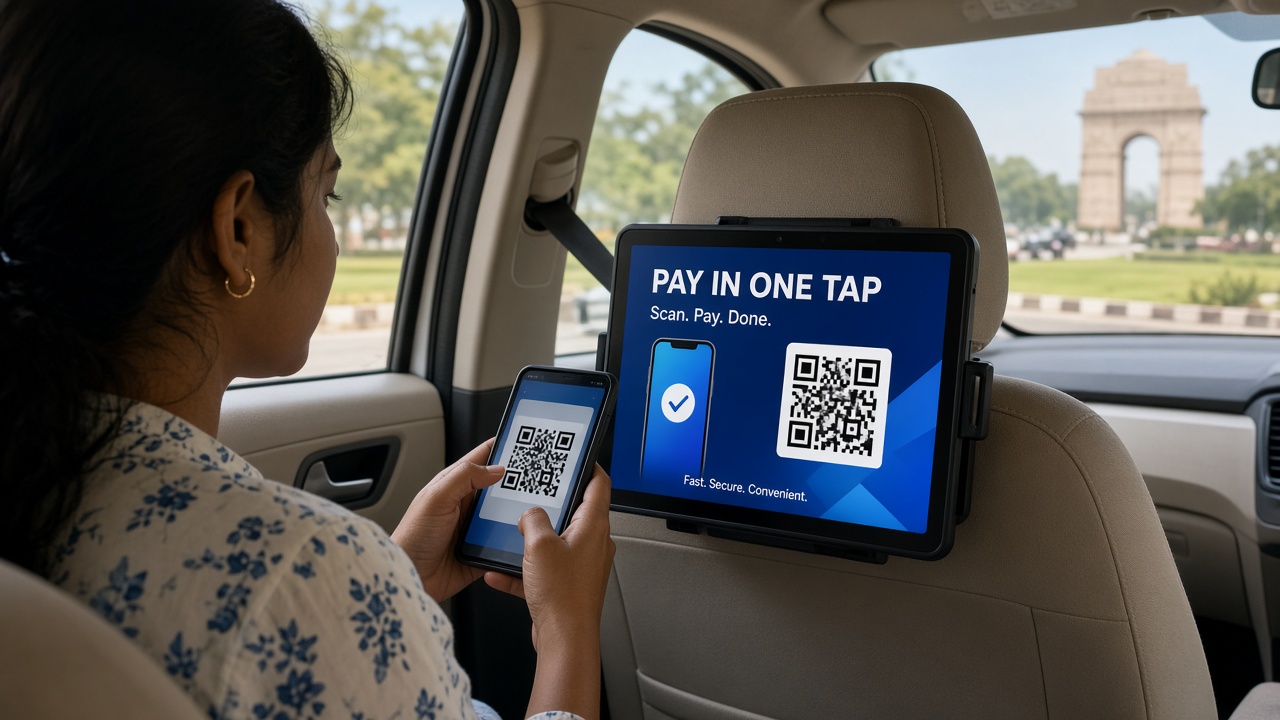
An in-cab screen and a hoarding are both outdoor media, and they are bought for different moments. A hoarding faces people moving past a junction. An in-cab screen faces one passenger who is already seated.
How long is someone with the ad?
On a hoarding, the viewing chance is the time it takes to pass the site. On Backseat Network, the plan is that the passenger has the screen for the ride, 20 to 45 minutes on a typical city trip, at about 60 cm. Those two figures are Backseat Network’s planning numbers for its own tablets. They are not a measurement of every hoarding in India.
The screen is silent, and the creative loops. A QR code can sit on the ad for the whole ride. A hoarding can carry a short line of copy, and the person has to remember it after they have driven on.
What does the cab screen cost?
Backseat Network’s published rate is ₹4,000 per cab per month, plus 18% GST. Ten cabs for one month are ₹47,200 including GST. The rate is the same in Mumbai, Delhi NCR, Bengaluru, Hyderabad, Chennai and Pune. The calculator is on the pricing page.
What does a hoarding cost?
This page does not list a hoarding price. Site owners set those rates, and they vary by city, size and how long the vinyl stays up. Quoting a single hoarding number here would be a guess. The full side-by-side, including wraps, auto branding and social ads, is on the compare page.
When does each one fit?
Use a hoarding when the job is a landmark on one road. Use an in-cab screen when the job is time with a person who is going somewhere, plus a QR and a GPS log of each play. Many plans use both. The hoarding holds a junction. The cab follows people across the city.
Updated 31 October 2026. The rate is the Backseat Network rate card of that date. Dwell time and distance are Backseat Network planning figures.
Put this on a cab this week
₹4,000 per cab per month plus GST. Build the ad yourself, or book a 15-minute demo.